
Tethered UAV Power Explained: Power, Voltage, Cable Weight and Transmission Loss
At a given DC power level, higher transmission voltage reduces current. For the same cable resistance, lower current reduces resistive loss. However, usable UAV power and operating height also depend on converter losses, cable mass, wind, thermal limits and the aircraft configuration.
A tethered UAV may remain airborne for extended periods, but continuous flight does not mean unlimited power.
The performance of a tethered drone depends on a balance between four variables:
Understanding this relationship is essential when comparing tethered UAV power systems.
Why Power Rating Alone Is Not Enough
Suppose a UAV requires power for:
- propulsion;
- flight-control electronics;
- onboard systems;
- mission payload.
Adding a high-power searchlight, communication relay or other payload increases total system demand.
The ground power system therefore needs to support the complete aircraft configuration rather than the UAV alone.
A simplified engineering concept is:
Required System Power ≈ UAV Power + Payload Power + System Losses + Design Margin
The exact margin should be determined from actual aircraft and system characteristics.
Why Tethered UAVs Use High Voltage DC
Electrical power can be expressed as:
P = V × I
Where:
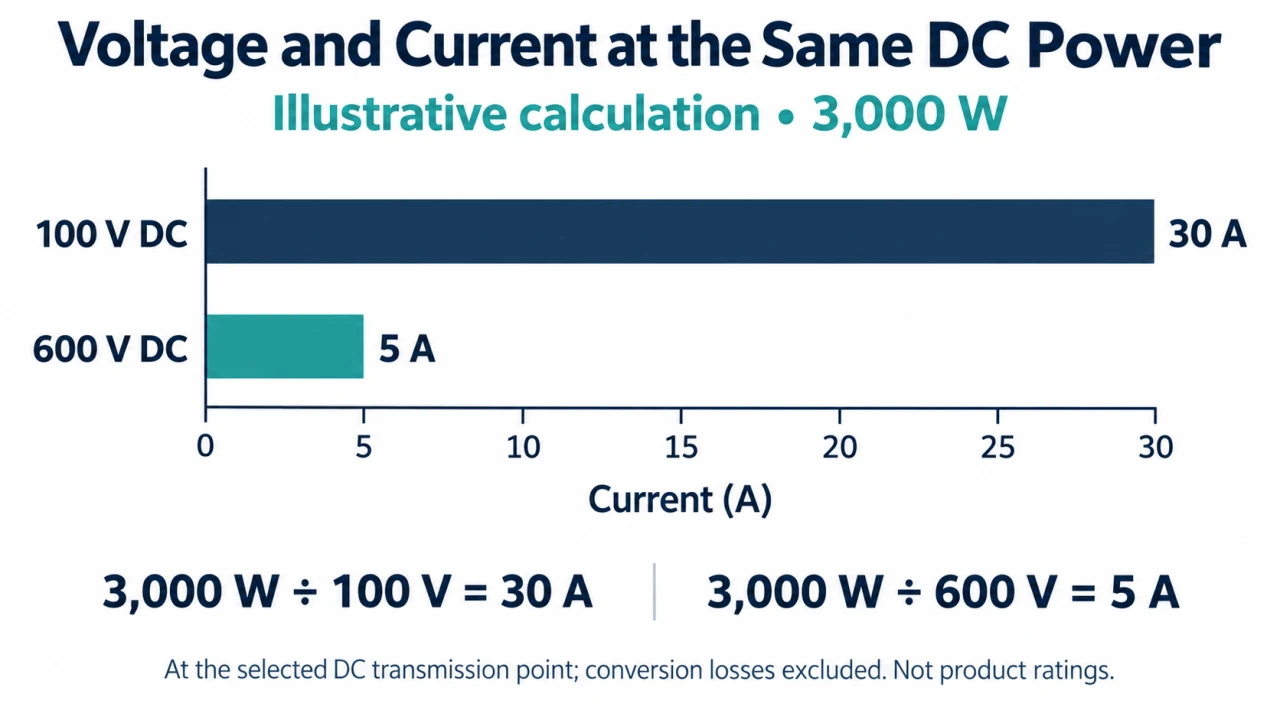
For the same transmitted power, increasing voltage reduces current.
For this illustrative calculation only, P is DC electrical power at the selected transmission point. These are not XINLV SMART product ratings. Ignoring conversion losses:
That difference matters because higher current generally requires heavier conductors and produces greater resistive loss.
This explains why high-voltage transmission is an important design approach in tethered UAV power systems.
The Hidden Problem: Cable Weight
A tether cable does more than carry electricity.
The aircraft must physically lift a portion of that tether.
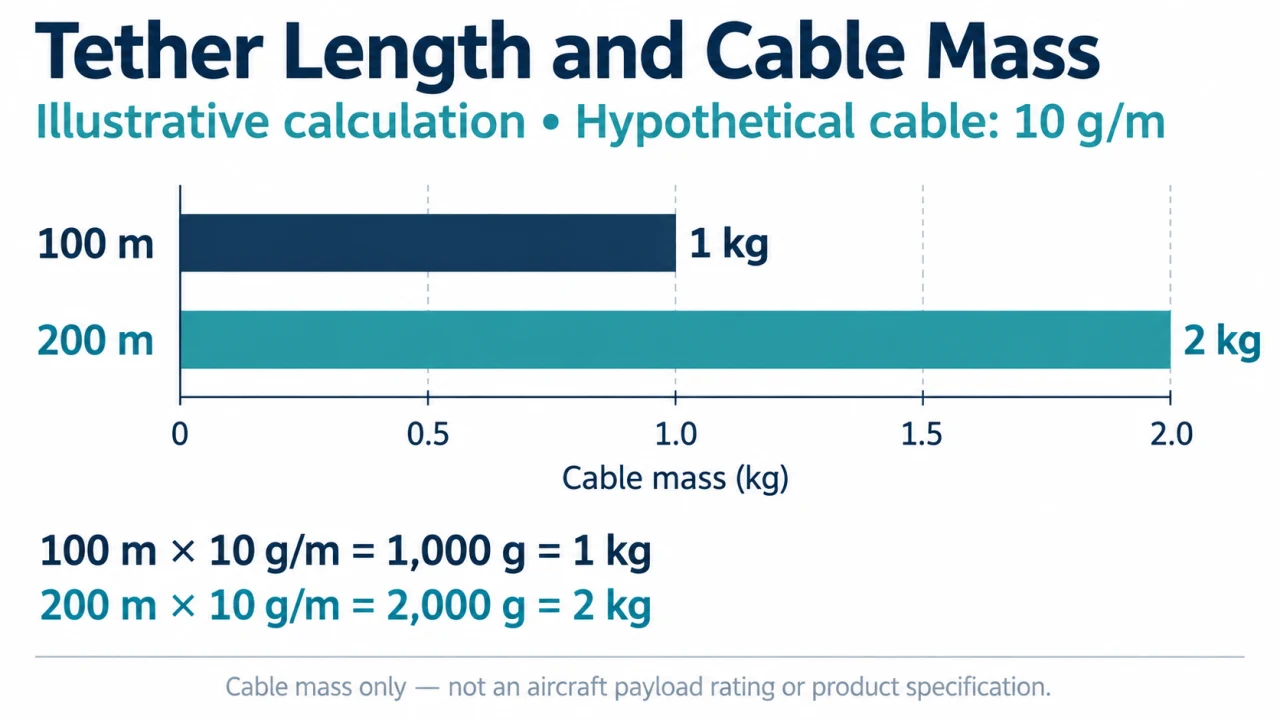
Consider a hypothetical cable weighing 10 g/m:
These are cable-mass calculations, not aircraft payload ratings. Actual forces at the UAV depend on suspended length, geometry, tension and wind. The airborne converter and mounting hardware also contribute to the flight load.
This simplified example demonstrates why grams per meter can become a critical engineering parameter.
As tether length increases, the aircraft must cope with increasing cable mass, aerodynamic drag and environmental forces.
Therefore:
Longer tether does not automatically mean better system performance.
Transmission Loss Matters
Long cables introduce electrical resistance.
The approximate resistive loss is:
Ploss = I²R
Here R is the total outgoing-and-return circuit resistance, including relevant connections. Voltage drop is ΔV = I R. Voltage drop and power loss are related but are not the same specification. Resistance varies with conductor temperature.
This again demonstrates why reducing transmission current is important.
If current doubles, resistive loss increases by approximately four times when resistance remains unchanged.
This relationship explains the engineering value of high-voltage, lower-current power transmission in long-tether UAV applications.
Tether Length vs. Actual Operating Height
A common misunderstanding is:
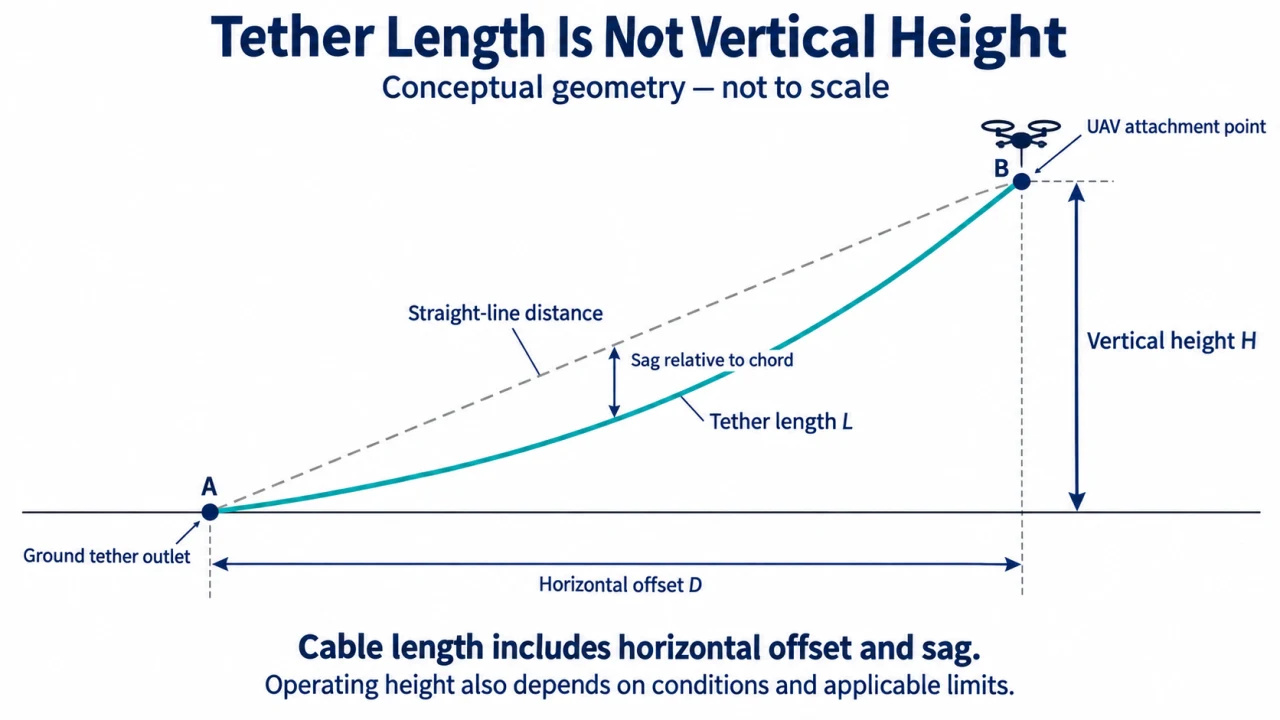
100 m tether = 100 m operating altitude.
Not necessarily.
Actual operating geometry can depend on:
- tether angle;
- wind;
- aircraft position;
- cable sag;
- safety margin;
- local operational restrictions.
Cable length should therefore be treated as a system specification rather than a guaranteed operating altitude.
What Should a Buyer Ask?
Instead of asking only:
“How many kilowatts is your tethered power supply?”
Ask:
What is the continuous output power? What is the peak output power? What is the tether transmission voltage? What is the cable weight per meter? What is the transmission loss at rated load? What is the airborne module weight? What happens when payload power suddenly increases?
These questions provide a much better indication of whether a tethered power system is suitable for a specific UAV mission.
Frequently Asked Questions
Why does a tethered drone use high voltage?
To transmit the required power at lower current, helping reduce conductor requirements and resistive losses.
Does a longer tether reduce UAV payload capacity?
Potentially. Cable mass, drag and operating conditions can affect the aircraft’s available performance margin.
Is maximum output power the most important specification?
No. Continuous power, voltage stability, tether weight, conversion efficiency, thermal performance and aircraft compatibility should be evaluated together.
Discuss Your UAV Configuration
Planning a long-endurance UAV mission? Provide your UAV model, payload power and required tether length to XINLV SMART for preliminary system matching.
XINLV SMART is a system integration, supply-chain and solution provider. Configuration discussions focus on matching the UAV, payload and power-system components. Compatibility, operating limits and available supporting documentation must be confirmed for the proposed configuration.
Request a Configuration Review