
How to Choose a Tethered Drone Power Supply for Long-Endurance UAVs
Selecting a tethered power supply for long-endurance missions means working from the mission profile inward: real power consumption, total carried weight, tether length versus operating altitude, high-voltage transmission, electrical compatibility, ground-power input options, backup battery behavior, thermal continuity, environmental protection and mission-specific priorities.
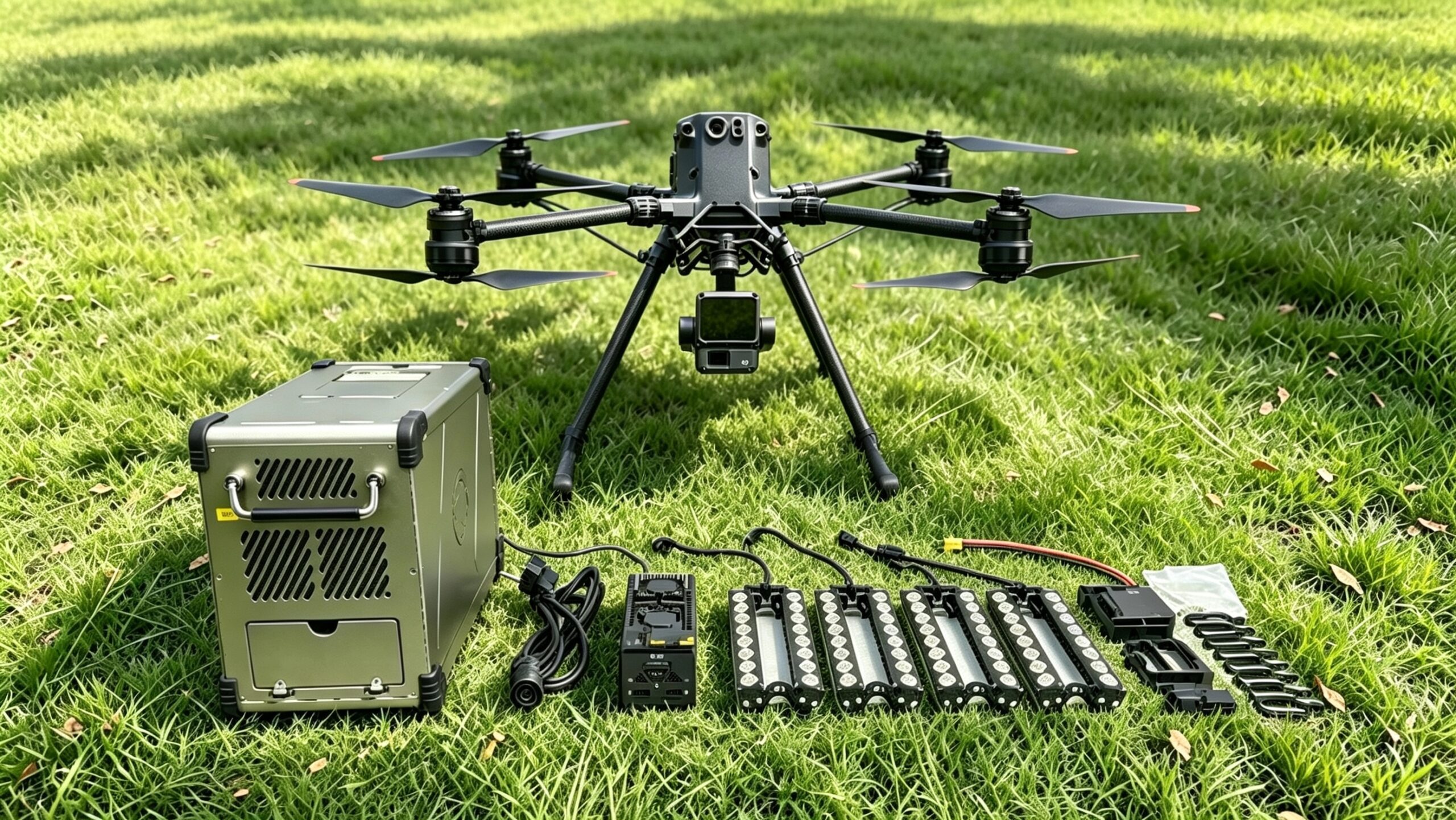
For drone operations that require hours of continuous flight, battery endurance is often the biggest limitation.
A conventional multirotor may stay airborne for only tens of minutes before its batteries must be swapped or recharged. A tethered drone power supply changes the equation: it feeds continuous electrical power from a ground unit through a lightweight tether cable.
When properly configured, a tethered UAV system can support continuous aerial operation for many hours while the drone holds position, follows a target or keeps its sensors on station.
This guide walks through the ten factors that matter most when choosing a tethered power supply for long-endurance missions.
1 Start With the Drone’s Actual Power Consumption
Power consumption varies with drone weight, propulsion system, payload, hovering altitude, wind and temperature. Published endurance figures rarely reflect a real mission profile, so the continuous hovering power of your specific configuration is the key reference.
Build the power budget from four parts:
- Drone operating power
- Payload power
- System losses
- Appropriate power reserve
A practical calculation is: drone operating power + payload power + system losses + appropriate power reserve.
2 Calculate the Total Payload, Not Just the Mission Payload
The aircraft may need to carry more than the camera or sensor. An airborne power conversion module, tether connection components, a safety battery and cable management hardware all add weight.
How much does the airborne module weigh for my drone, and how does it affect my payload budget?
3 Match the Tether Length to the Required Operating Altitude
Engineering calculations should consider required altitude, total tether length, cable weight per meter, wind load and cable drag. A tether that is too long adds avoidable weight and loss; one that is too short limits the operating envelope.
What tether length and cable gauge do you recommend for my operating altitude and wind conditions?
4 Understand Why High-Voltage Power Transmission Matters
Higher transmission voltage reduces current, electrical losses and conductor weight. Over a long cable, that difference decides how much power actually reaches the drone.
Compare transmission voltage, conversion efficiency, cable specifications, airborne module weight and thermal management as a single system — not as isolated numbers.
5 Check Compatibility With the Drone’s Electrical Architecture
Confirm the drone model, battery voltage range, normal and maximum operating power, payload capacity and required altitude against the proposed system. The power supply must match the aircraft’s electrical architecture, not just its plug.
6 Pay Attention to Ground Power Input
The ground system may receive electricity from utility power, a portable generator, mobile energy storage or a vehicle-based source. For remote sites, input flexibility determines where the system can actually be deployed.
7 Do Not Ignore the Backup Battery
An onboard backup battery remains important if ground power fails or the tether disconnects. Evaluate:
- Power interruption detection
- Automatic switching
- Backup battery capacity
- Emergency landing logic
- Low-voltage protection
8 Consider Thermal Management for Long-Duration Operation
Evaluate operating temperature range, cooling method, over-temperature protection, enclosure design and continuous-duty ratings. A system that is comfortable for a 20-minute flight may not be comfortable after four hours.
9 Environmental Protection Matters in Real-World Operations
Outdoor deployments may encounter rain, dust, humidity, wind, temperature extremes, salt and corrosive environments. Check the ingress protection ratings of the ground unit, connectors and airborne module — and how they behave together, not individually.
10 Select the System According to the Mission
Different missions stress different parts of the system:
- Surveillance and Security — prioritize endurance, stable hovering, camera payload capacity and reliability.
- Emergency Lighting — include the lighting system’s power demand in the total calculation.
- Communication Relay — stable continuous power, operating altitude and tether length are key.
- Event and Traffic Monitoring — consider portability, noise, cable management, setup time and rapid deployment.
- Emergency Response — portable generators or mobile energy storage may be essential when grid power is unavailable.
Conclusion
The correct tethered drone power supply depends on the complete mission profile — not simply the UAV model or advertised watts. Working through these ten factors with your supplier is the fastest way to a configuration that flies as long as your mission requires.
Discuss Your UAV Configuration
Evaluating a tethered UAV system for a professional project? Send XINLV SMART your UAV model, operating environment, payload and mission requirements. We can help identify the key power-system parameters that should be evaluated.
XINLV SMART is a system integration, supply-chain and solution provider. Configuration discussions focus on matching the UAV, payload and power-system components. Compatibility, operating limits and available supporting documentation must be confirmed for the proposed configuration.
Request a Configuration Review